
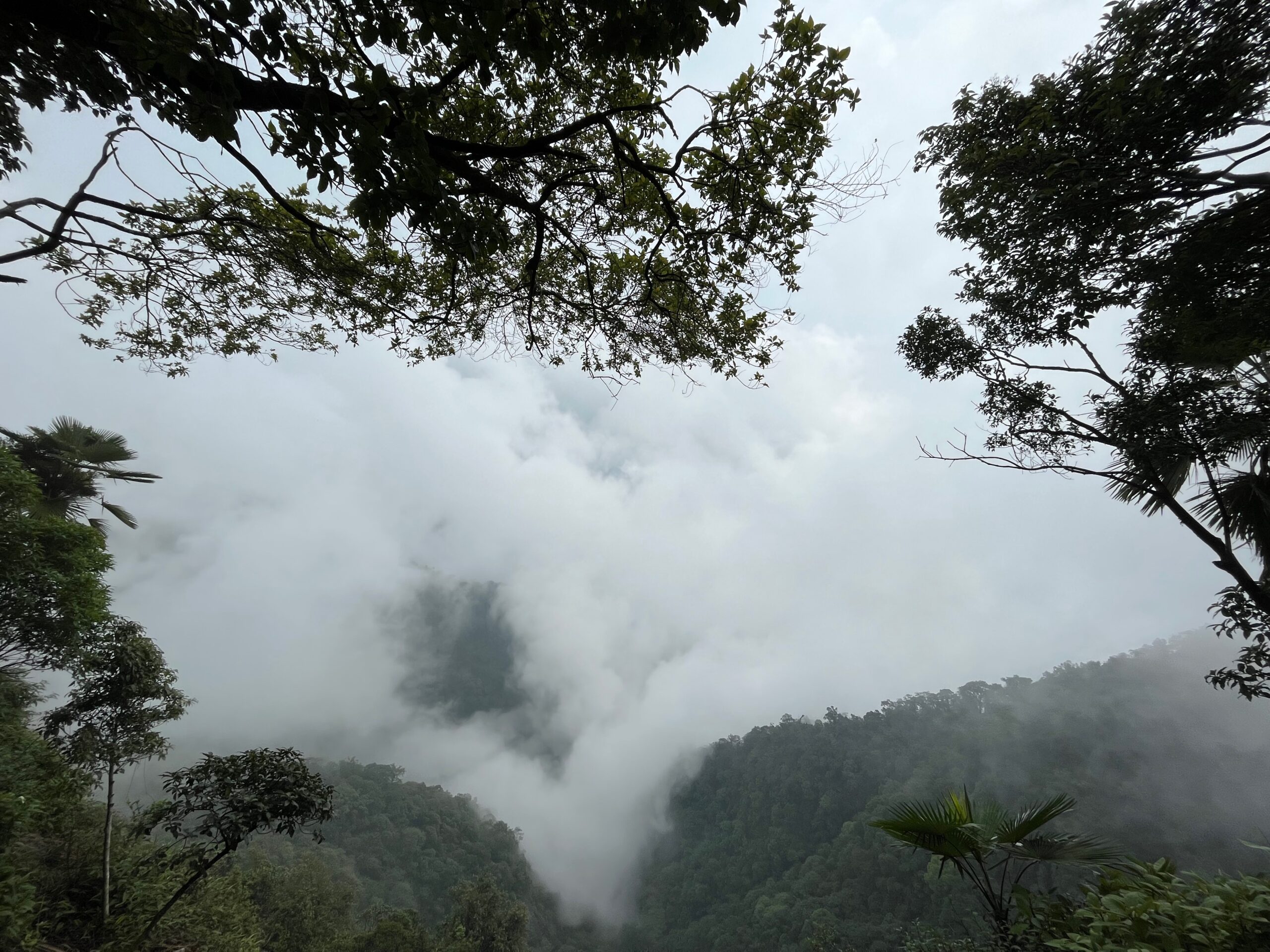
If you’re looking for a beautiful tourist destination that combines nature and culture, a trip to Meghalaya in northeastern India is a must. With its breathtaking waterfalls, peaceful villages, and stunning views of the hills and valleys, this state offers plenty of opportunities for adventure and relaxation. I took a 6D 5N (April 29th – 4th May) all-girls trip with my undergrad friends to Meghalaya and it was absolutely amazing and refreshing. Here’s an account of our memorable trip to Meghalaya.
Itinerary
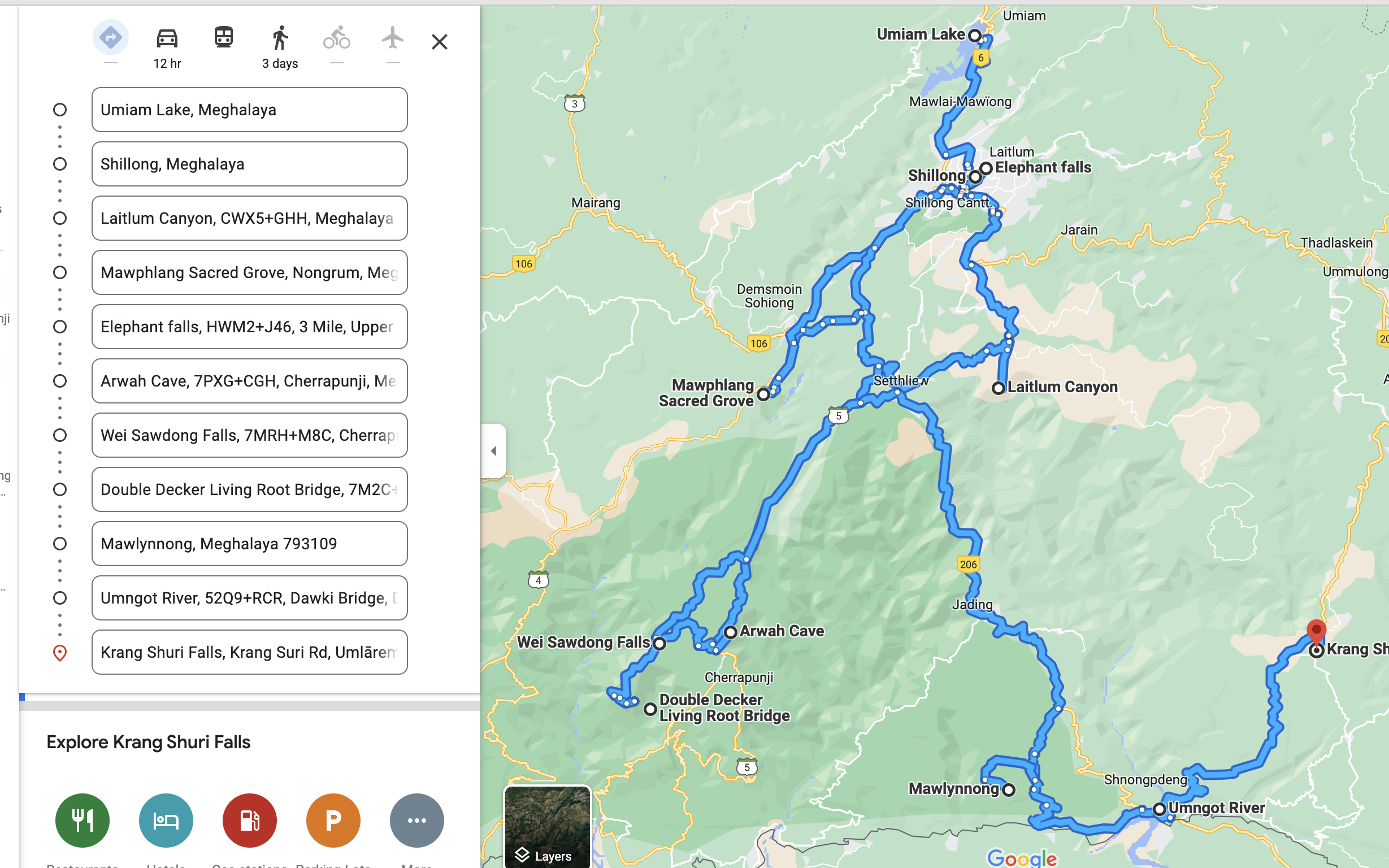
Though we had a different plan originally, we had to improvise based on the weather conditions and Holidays (some places are closed on holidays, that we failed to account for). I will also include links to the stays we chose which were all absolute delights.
Day 1
Since each of us was coming from different cities, we coordinated our arrival times at Guwahati Airport, ensuring that everyone reached before 1 pm. We booked a cab with a driver for 5 days through a known source for safety (as it was an all-girls trip) and we did not want to take any risk driving in the tough terrain of Meghalaya. We started from Guwahati Airport around 1.30 pm to Shillong and made a quick stop at Umiam Lake en route to Shillong. It takes around 3 Hrs to reach Umiam Lake from Guwahati.
Important: Tourists have to download the Meghalaya Tourism app and give information about each passenger (Photo, ID, Vaccination certificate, if applicable), itinerary, and stay details for at least 2 days on the app to enter the state of Meghalaya. One person can register details of all the passengers in the app and an e-invite is generated which is to be presented at the entry checkpoint. Disclaimer: This was required in 2022, I am not aware of the present scenario.
1. Umiam lake
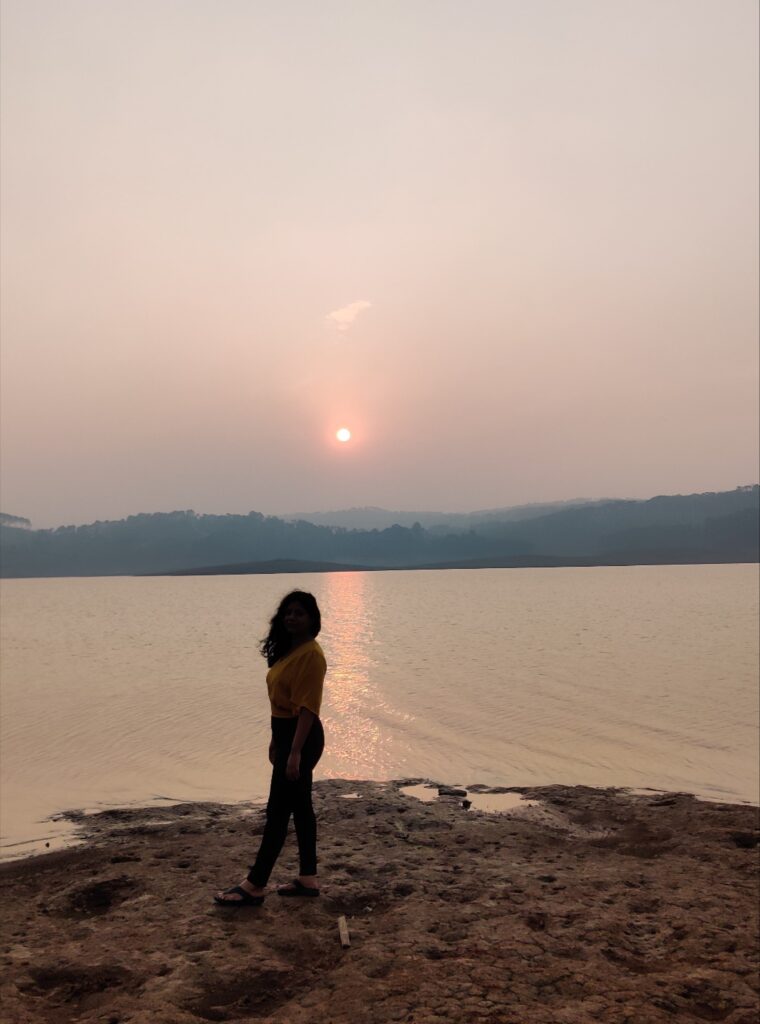
Located ~18 km north of Shillong, Umiam Lake is a beautiful spot for nature lovers. Surrounded by thick coniferous forests of the East Khasi hills, it offers one of the best panoramic views of the surrounding landscapes.
We reached Umiam Lake around 4 pm. There’s an entry fee of Rs. 20 per person and the lake is open from 10 am to 5 pm. We had about an hour to enjoy the serene lake and click some pictures. There are also options for boating.
One can enjoy beautiful and calming sunrises or sunsets here. We were already in love with the beauty that Meghalaya is.!
After we were thrown out by the security guard from the place, as it was already closing time, we set out to Shillong which is about 45mins-1hr drive from Umiam.
We reached Shillong around 8 pm. As we were traversing the lanes of Shillong City, we were thrilled to see almost all the shops run by women (a parallel universe perhaps!).
The Khasi and Garo tribes of Meghalaya practice Matrilineal descent meaning children get the surname of their mother. The youngest daughter in the family inherits all ancestral property. Following marriage, the husband moves into the mother-in-law’s home and the children take on their mother’s surname. In situations where a couple does not have any daughters, they may adopt a daughter and pass on their property rights to her. The youngest daughter looks after the welfare of her parents in their old age, as well as the welfare of her siblings (maybe I will settle down in Meghalaya someday!)
After the long journey, we reached our stay in Shillong, a cozy and pretty 2.5-bedroom apartment we booked on Airbnb. The host made our stay very comfortable. We stayed in Shillong for 2 nights.
Link to Shillong stay:
Day 2
After a good night’s sleep, we set out for the day’s itinerary to check out 3 places: Laitlum Canyon, Mawphlang Sacred Groves, and Elephant Falls.
2. Laitlum Canyon
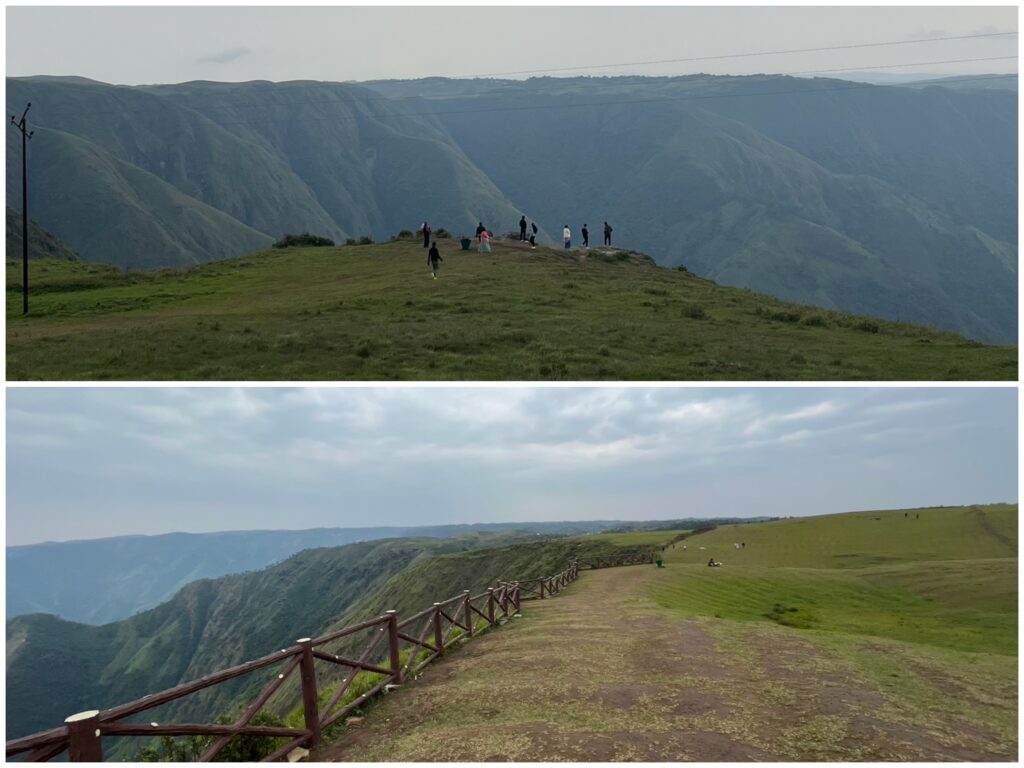
Originally not on our list of places to visit, our driver suggested that it’s a must-see place and we would enjoy it, so we went ahead and it was a treat to the eyes. It was a windy day and the weather made it all the more beautiful.
Laitlum Canyon is situated at an elevation of around 1,900 meters above sea level and offers stunning views of the lush green hills and deep valleys below. The canyon is also home to several waterfalls, which add to the beauty of the place.
Literally translating to ‘End of Hills’, this is one of the most serene places one can visit in Meghalaya. The endless green carpet offers a mesmerizing view of the mountains and clouds. Step onto this wonderland and enjoy some hot lemon tea or corn cobs while you soak in the cool breeze.
It’s a great place to unwind, sit down for a while and chat with your friends or get a book and read your heart away. Click some of the most stunning, picturesque, and panoramic pictures and take those happy, cheerful memories home with you.
3. Mawphlang Sacred Groves Forest
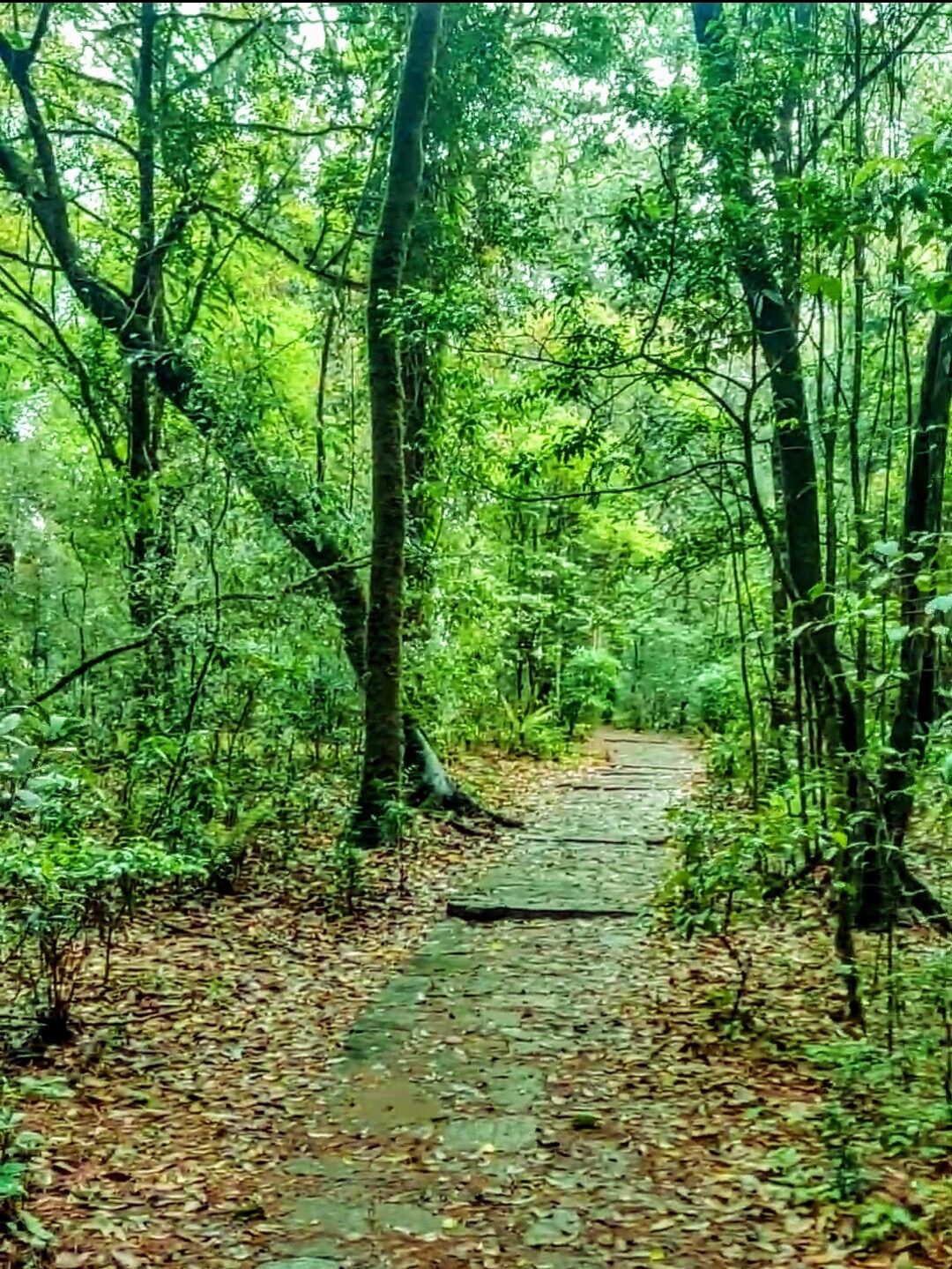
We headed to Mawphlang Sacred Groves Forest after spending a few hours at Laitlum Canyon. The best thing about Meghalaya is every nook and corner is serene and soothing to the eyes. It was drizzling by the time we reached the Sacred Groves (thankfully we packed our raincoats).
A guide is compulsory to enter the forest and frankly, it’s much better with a guide otherwise it makes little sense to walk around in the forest without knowing its history or cultural significance.
The entrance to the forest seems like a magic portal that will take you to a dreamland and the forest is indeed a magical place. The Mawphlang Sacred Groves Forest covers an area of approximately 78 hectares and is situated at an altitude of 1,500 meters above sea level.
The forest is home to a diverse range of flora and fauna, including some rare and endangered species. The forest is dense and lush, with a thick canopy of tall trees that provides shade and shelter to the wildlife.
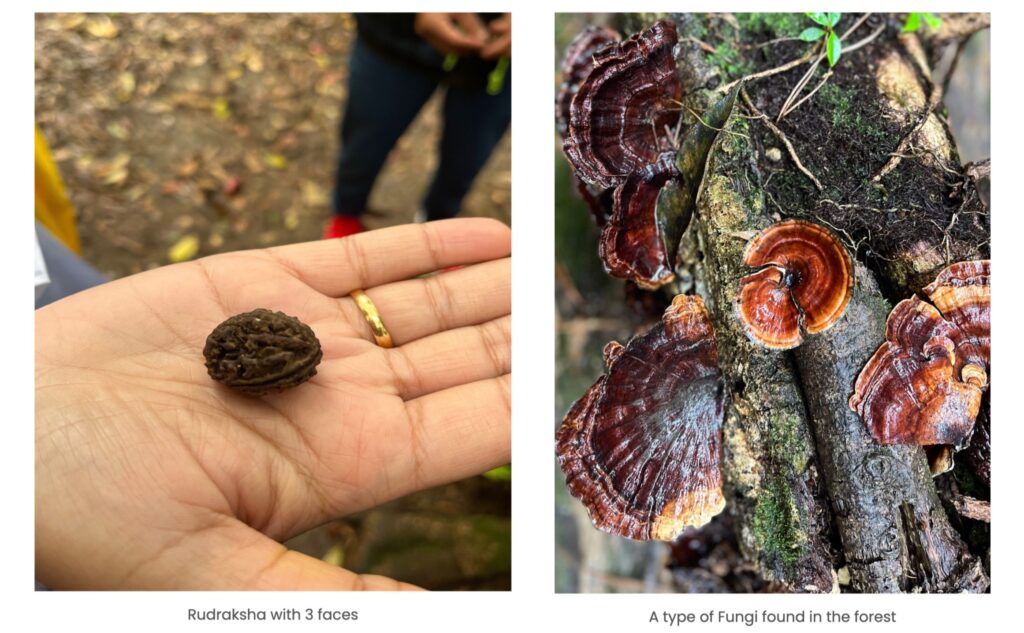
Mawphlang Forest is the oldest and the largest sacred forest of over 50 sacred forests of the Khasi tribes. Each forest has a sacred grove, protected by a local deity, where the tribes assemble to offer sacrifices. The Mawphlang sacred forest is said to be protected by the local deity ‘Labasa’. There are many monoliths in the forest which are spiritual emblems of the cultural ties Khasi people have with these forests. These monoliths are worshipped by the Khasi tribe. It is said that in ancient times, grand processions, sacrificial rituals, and extravagant feasts were held in these forests. Warning: Do not take anything out of the forest (not even a dried leaf) as people believe it brings great misfortune.
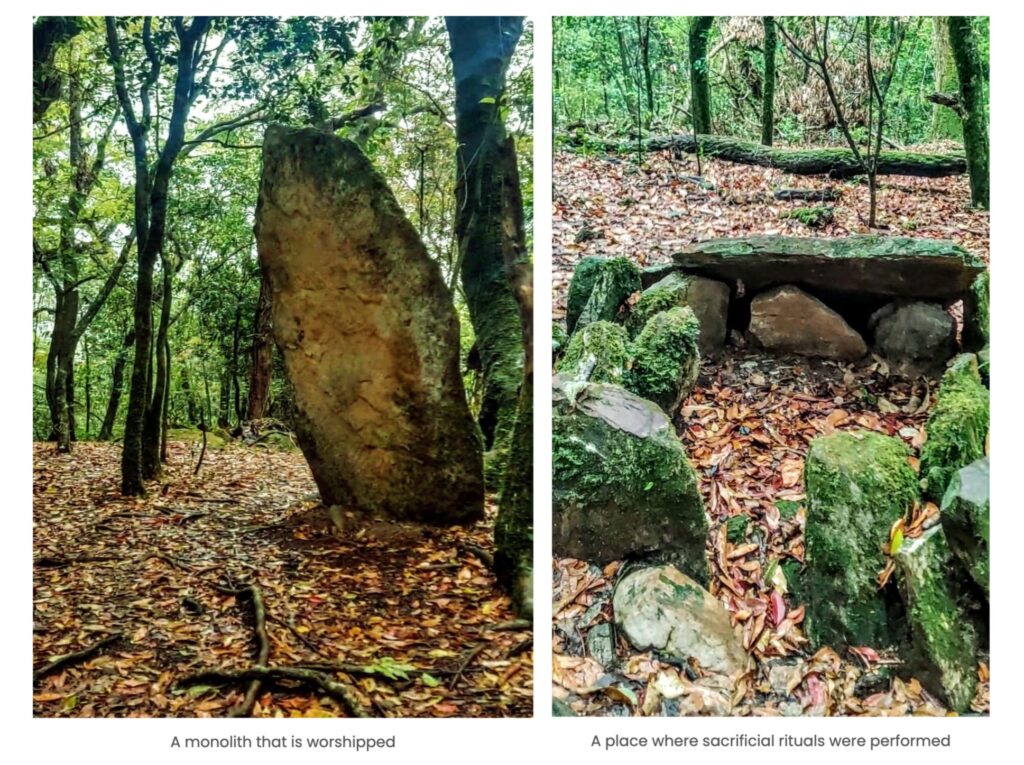
One can feel the mystic aura inside the forest and enjoy looking at the variety of trees and flowers (we were quite happy to not encounter any animals!). We spent about an hour in the forest. The Mawphlang Sacred Groves Forest is an example of the importance of protecting natural and cultural heritage sites. It is a testament to the resilience of traditional conservation practices and the need to balance economic development with environmental conservation. The forest is an important site for preserving biodiversity and cultural heritage, and it is a must-visit destination for anyone interested in experiencing the natural and cultural beauty of Meghalaya.
4. Elephant Falls
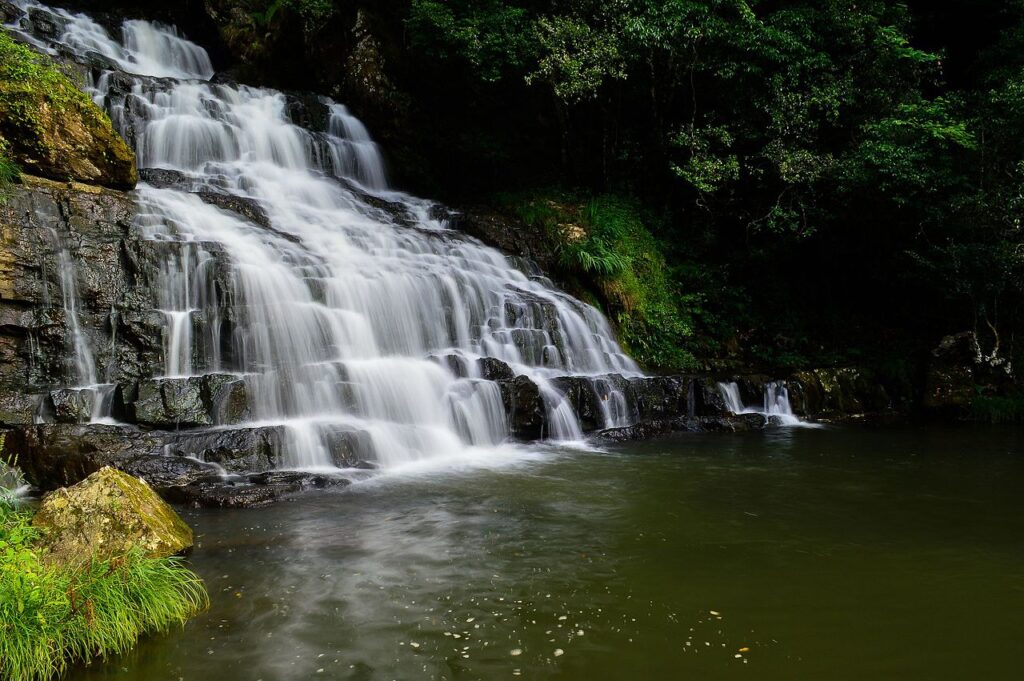
Elephant Falls is a popular tourist attraction located near the city of Shillong. The falls were originally named ‘Ka Kshaid Lai Pateng Khohsiew’ by the Khasi tribe, which translates to “Three Steps Waterfall.” It was later renamed by British colonizers after a rock resembling an elephant located at the base of the falls, which is now mostly destroyed due to an earthquake.
The waterfall is formed by three tiers, each with its unique charm and beauty. The first tier is the most accessible of the three. It cascades down from a height of about 20 meters and flows into a natural pool at the base. One can enjoy swimming in the pool and bask in the serene ambiance of the falls. The area surrounding the waterfall is rich in lush green vegetation, adding to the natural beauty of the location.
The second tier of the waterfall can be accessed through a trek from the first tier. It is a smaller waterfall but offers a picturesque view of the falls from a different angle. Visitors can enjoy a leisurely picnic by the falls and take a refreshing dip in the cool, clear water.
The third tier of the waterfall is the most challenging to reach and requires a strenuous trek through a steep and narrow trail. The reward for reaching the third tier is a breathtaking view of the waterfall from the top, surrounded by dense forests and misty mountains.
The Elephant Falls and the surrounding area offer a wide range of activities for visitors, including trekking, picnicking, swimming, and birdwatching.
Day 3
We planned to leave from Shillong around 7 am to reach Cherrapunji by 9 am so we can take the trek to Nongriat Double-decker living root bridge. Only after reaching Cherrapunji, we realized that it was closed due to a holiday on May 1st. So we planned to visit other places in Cherrapunji.
5. Arwah Caves
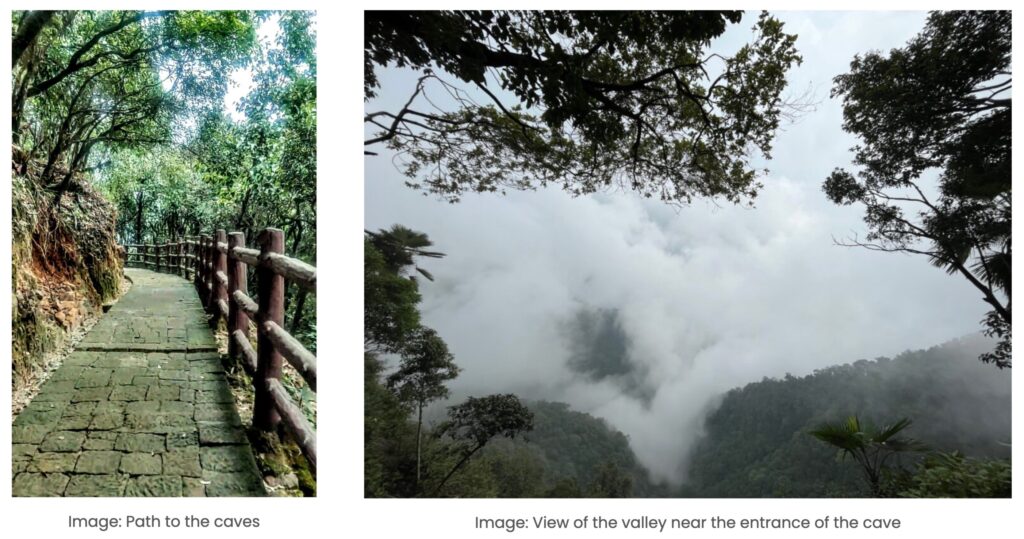
The Arwah Caves are a network of limestone caves located approximately 4 km from Cherrapunji town. These caves are believed to be around 5000 years old and were discovered in 1980 by a local farmer named Kan Nongtdu. Since then, the Arwah Caves have become a popular tourist attraction, drawing visitors from all over the world.
To reach the Arwah Caves, one must embark on a short trek on a well laid-out path. It takes around 30-45 minutes to reach the caves. Tourists can also take the path less trodden and choose to trek through the forest rather than the well laid-out path, which can be quite challenging, especially for those who are not used to hiking. We almost got stuck in the forest as we could not find a way to climb down the hill though we could see other tourists on the stoned path. Please only take the route through the forest if you are a frequent trekker and can find your own way out.
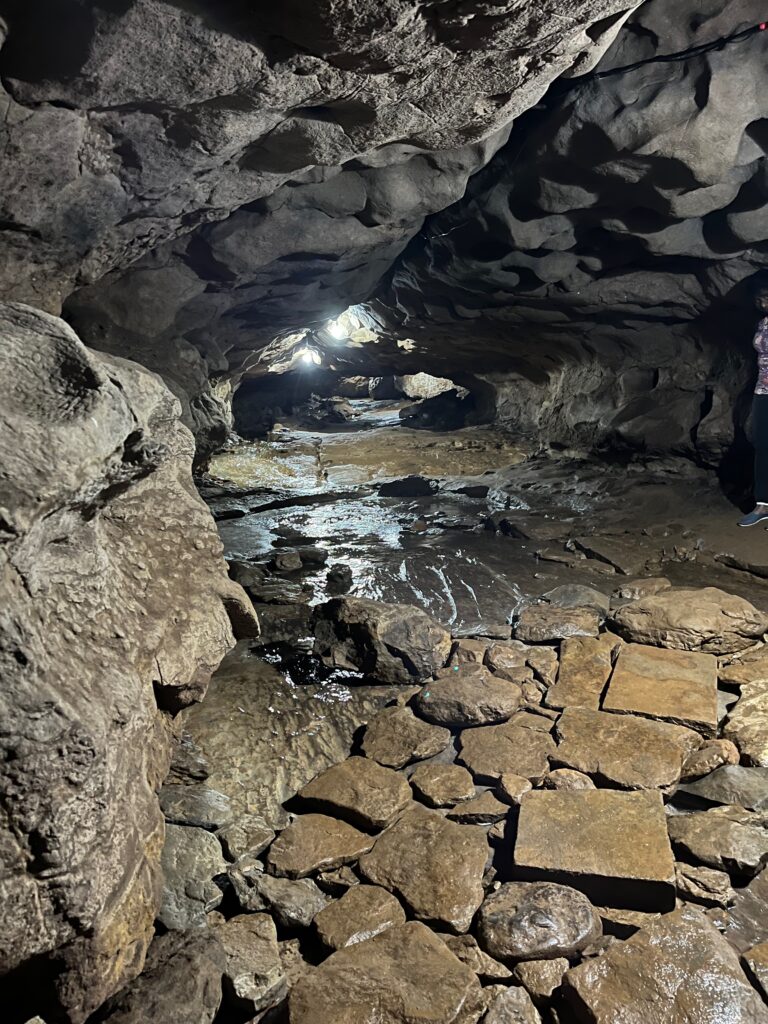
The Arwah Caves consist of several chambers, with the largest chamber being over 100 meters long and 20 meters high. The caves have stalactites (icicles formed from the dripping of minerals from the ceiling) and stalagmites (an inverted stalactite, rising from the floor of a cavern), formed over thousands of years by the slow dripping of water.
Once inside the caves, you can explore the various chambers and marvel at the unique rock formations. You have to be careful while walking inside the caves as they can be quite slippery at some places.
The Arwah Caves are not only a natural wonder but also a testament to the rich cultural heritage of the Khasi tribe, who have lived in the region for thousands of years. According to Khasi legend, the Arwah Caves were once used as a hideout by their ancestors during times of war and conflict.
You can also visit another popular destination, Mawsmai Caves, which is located at a short distance from Sohra.
6. Seven Sisters Falls
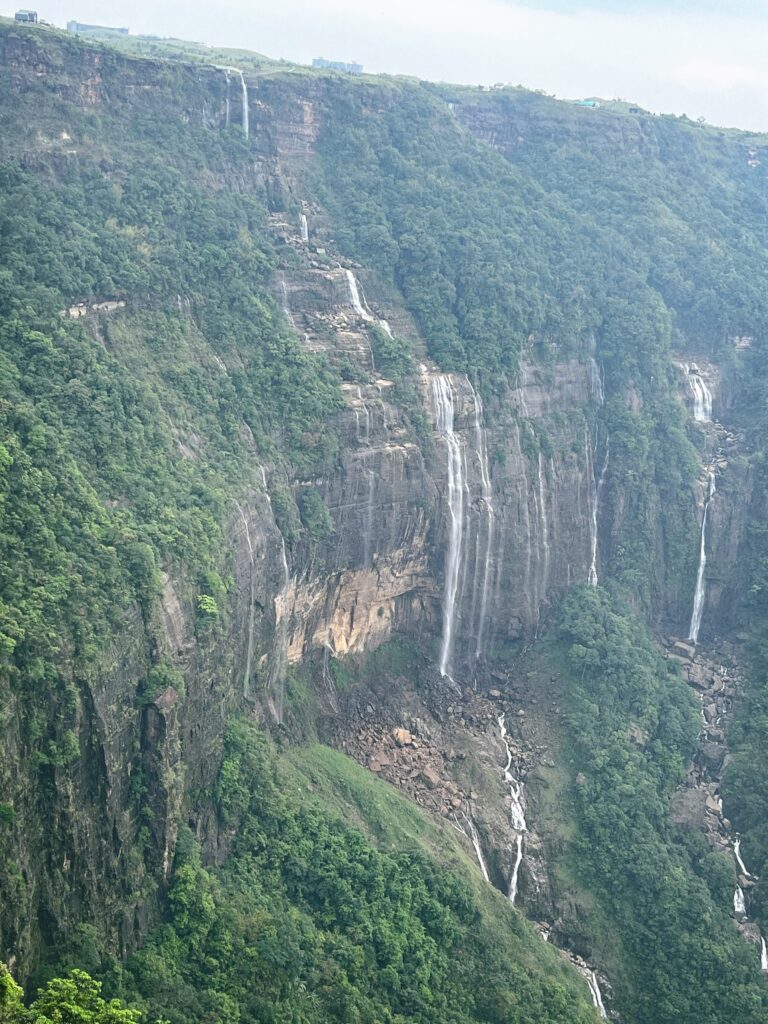
Seven Sisters Falls, also known as Nohsngithiang Falls, is a breathtaking waterfall situated near the village of Mawsmai. The waterfall gets its name from the seven streams that flow down in a single drop from a height of around 315 meters (1,033 feet).
The seven streams of Seven Sisters Falls are symbolic of the seven northeastern states of India – Assam, Arunachal Pradesh, Nagaland, Manipur, Mizoram, Tripura, and Meghalaya.
The waterfall is a natural wonder that showcases the stunning beauty of Meghalaya’s landscape. The falls are surrounded by lush green forests and rolling hills, which add to the charm of the place.
The streams had low flow when we visited. The best time to visit Seven Sisters Falls is during the monsoon season, which starts in June and lasts till September. During this time, the waterfall is in full flow, and the surrounding greenery is at its peak. The sight of the water cascading down from the cliff is truly mesmerizing, and one can enjoy a peaceful and serene atmosphere.
7. Wei Sawdong Falls
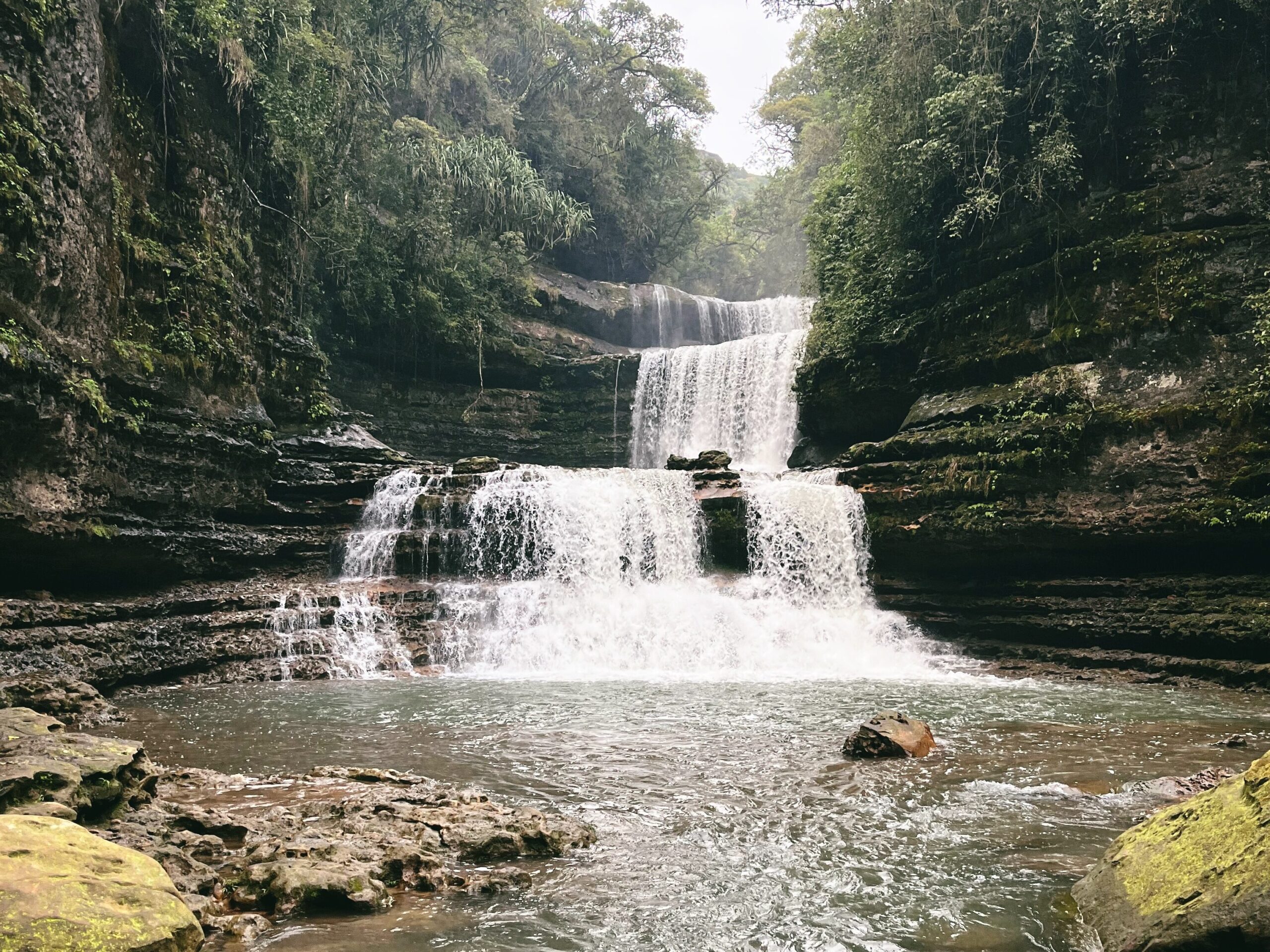
We visited Wei Sawdong after a friend said its a must-see. Wei Sawdong Falls is a hidden gem located in the beautiful town of Cherrapunji. The waterfall is a three-tiered cascading waterfall that offers a spectacular view of nature’s beauty. The name “Wei Sawdong” means “Three Steps Waterfalls” in the local language. It is surrounded by lush greenery and offers a peaceful and serene atmosphere.
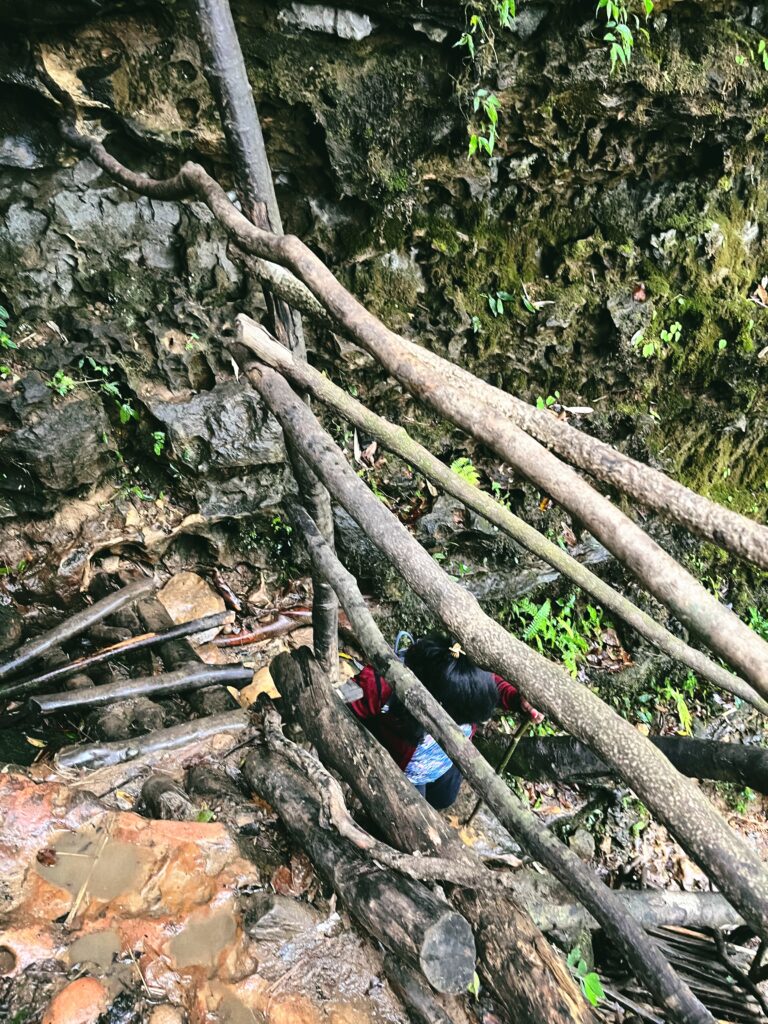
Wei Sawdong is arguably one of the best falls in Meghalaya. The first level of Wei Sawdong Falls is easily accessible and is a popular spot for picnics and day trips.
The second and third levels of the waterfall are more challenging to reach and require a bit of trekking down (~15-20 mins) some very steep steps and some makeshift bamboo ladders which can seem scary. Be sure to wear some comfortable shoes or sandals as it can be slippery and very steep in some places. But at the end of this tough trek lies a breathtaking view of the waterfalls. The trek can get even more tiring while climbing back up.
Take some awesome pictures, simply relax, enjoy the roar of the water, and take in the natural beauty of these falls.
Other popular falls you can visit in Cherrapunji are the Nohkalikai Falls and Dain-Thlen Falls. We couldn’t visit these falls due to lack of time.
We stayed at a decent and comfortable place in Cherrapunji called ‘Aisha Guest House’ which we booked on Airbnb (link given below). It was a pleasant stay with beautiful views of the mountains around. You can also find many options for guest houses even after reaching Cherrapunji.
Link to Cherrapunji stay:
Day 4
8. Nongriat double-decker living root bridge
As we couldn’t take the trek to the Nongriat double-decker root bridge as planned on May 1st (due to a holiday), we decided to take the trek the next day.
Nongriat double-decker Living Root Bridge is a natural wonder located in the remote village of Nongriat. It is a unique and magnificent creation of nature, where the roots of the Ficus elastica tree have been guided by the locals over a period of decades to form a natural bridge across the Umshiang River. The bridge is an architectural marvel that is estimated to be around 150 years old and is still in use by the local villagers. The living root bridges hold significant importance for the farmers and villagers of the region as they facilitate easy access to their respective plantations, homes, or places where they need to transport their products.
The trek to Nongriat Double Decker Living Root Bridge is an experience in itself. It starts from the village of Tyrna and is about 3 km long. The trek takes around 2-3 hours and involves descending around 3,500 steps, followed by a steep climb to reach the village of Nongriat. The route is lined with dense green forests, gurgling streams, and beautiful waterfalls that add to the natural beauty of the area.
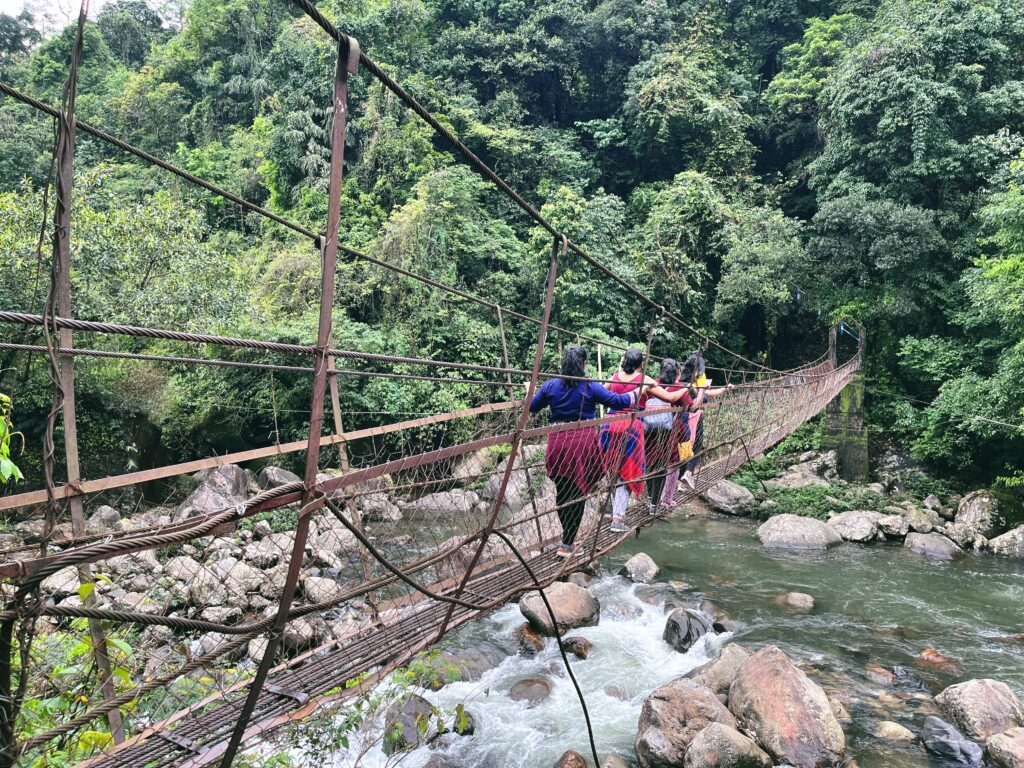
You will also have to cross 1-2 hanging bridges like the one in the image below.
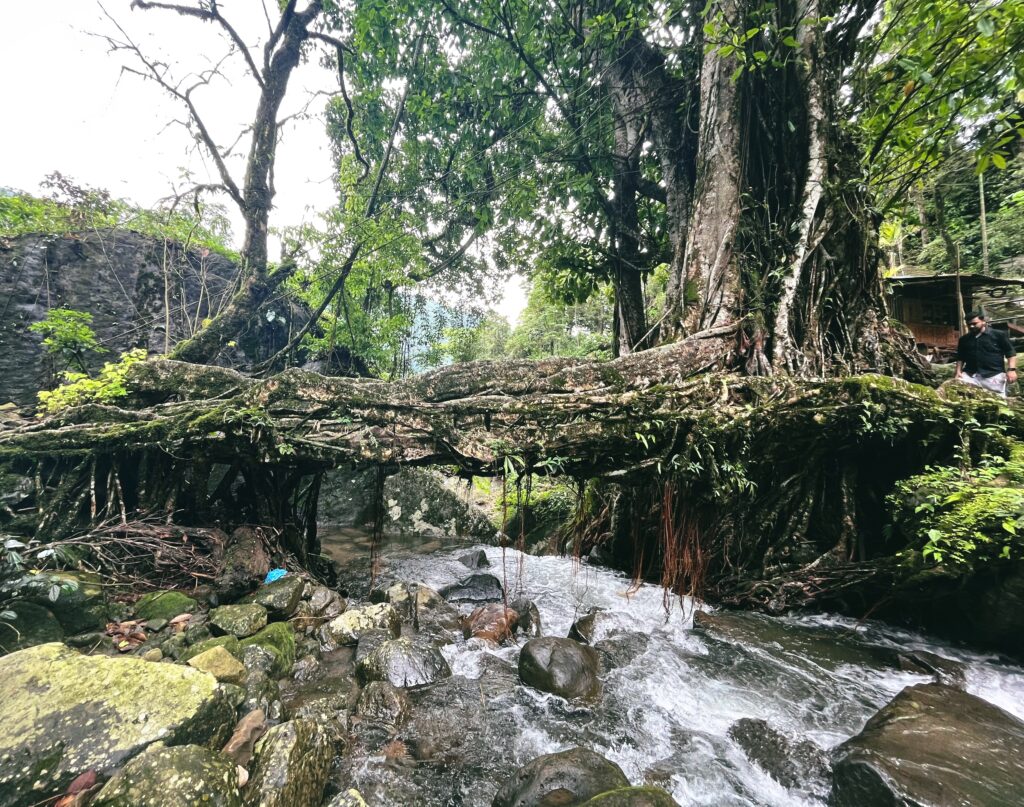
The first stop on the trek is the Single Decker Living Root Bridge, which is a smaller version of the Double Decker Bridge. It is a beautiful sight to see the roots of the tree growing and intertwining to form a sturdy and natural bridge across the river. You can stop for a while here as it’s less crowded or proceed to see the show-stopper.
After a few more steep climbs and descents, the Nongriat Double-Decker Living Root Bridge finally comes into view. The bridge is made up of two levels, with the lower level being wider than the upper level. You can walk across the bridge and even take a dip in the natural pool below but you will have to be very careful as the water flow can be very swift and it can be dangerous. The bridge is still in use by the local villagers, who use it to cross the river and access their fields.
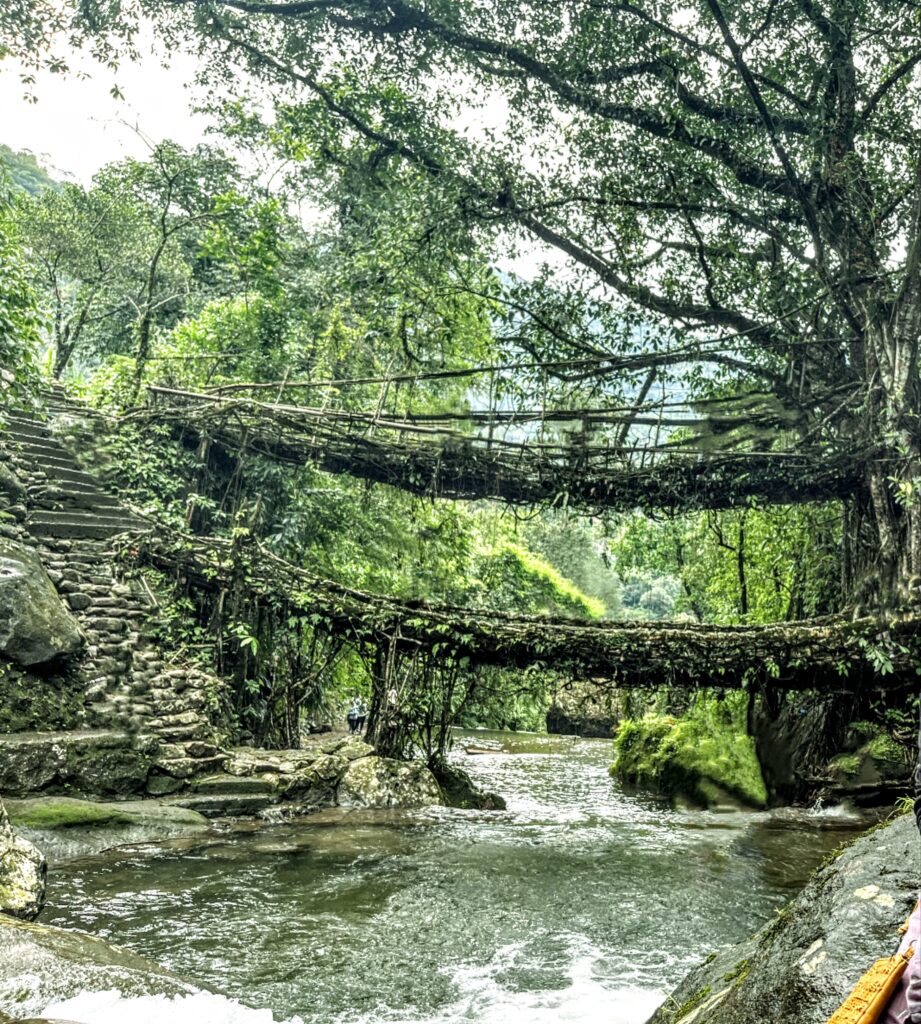
The ecstatic feeling after reaching this beauty is just inexplicable. This ever-famous living root bridge is a perfect example of how humans and nature can live harmoniously.
Though most of the time you will not be getting this tranquil view of the root bridge as it would be bustling with tourists and you have to move quickly to let others take some pictures (let’s be considerate, everyone has worked very hard to reach here). The earlier you reach this place, the lesser the crowd. The trek takes about 1.5-3 hours each way depending on your fitness level. The whole trek is enjoyable throughout (though physically draining) as you will see that the place is filled with natural pools, waterfalls, lagoons, pineapple plants, and many more wonderful sights.
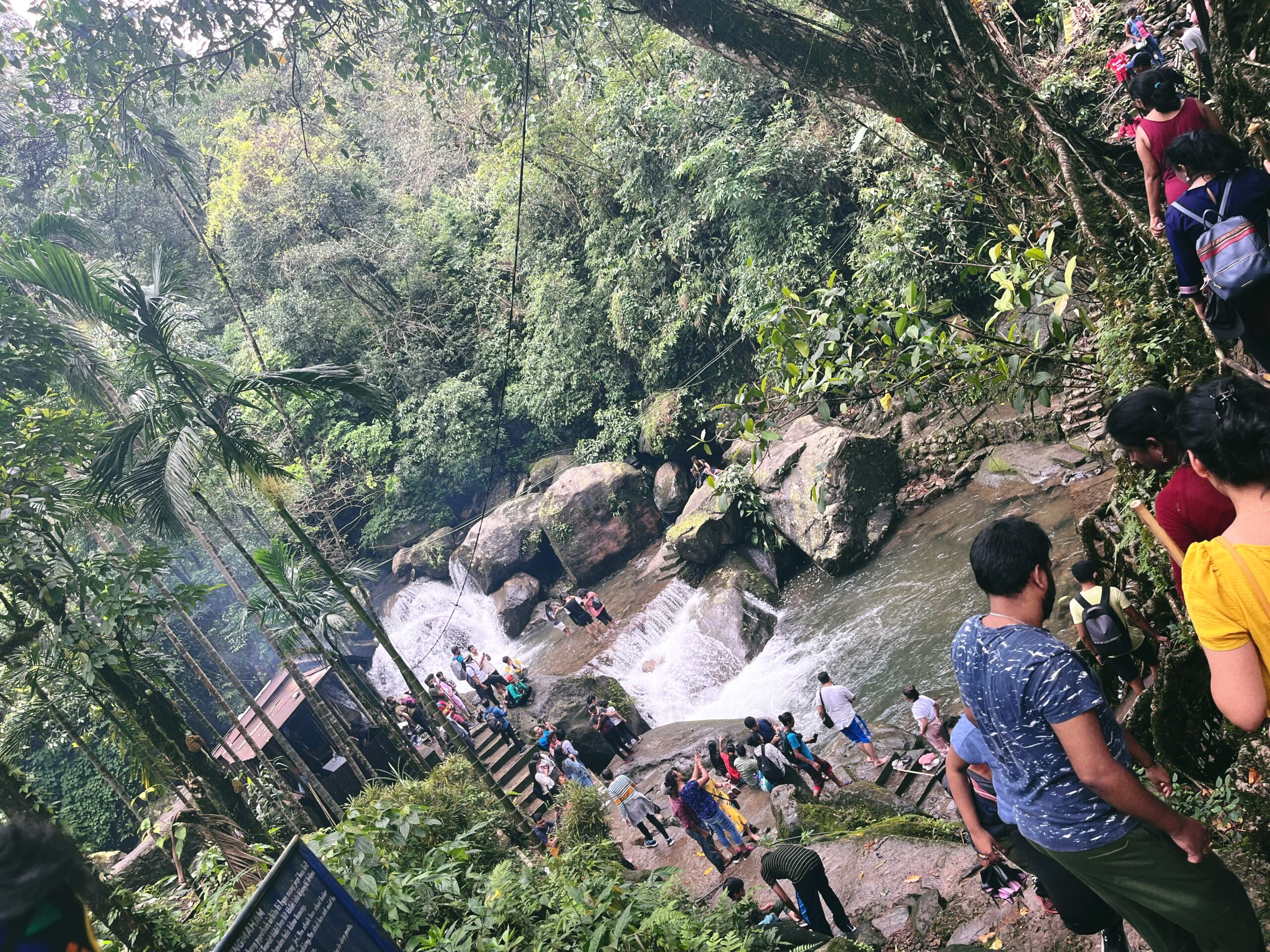
You can reach here without a guide as the tracks are pretty much marked. But we got confused at the starting point of the trek as to which path to follow. It’s better to take a guide as they can show some alternate routes which aren’t very steep. They will also help carry your bags if there are older people in your group. There are enough small shops along the way to the bridge where you can stop for a while and have some ‘local lemon’ juice (it tastes a little fermented), some tea, or some refreshments. Do carry water bottles as you will need to hydrate often while climbing up and down the stairs.
The trek takes up most of the day (and all of your energy) so some choose to stay at Nongriat village for the night if they want to stay longer at the bridge to enjoy the view. We found a few homestays along the trekking path (cannot say much about the cleanliness or quality of the stays but they seemed pretty decent for a one-night stay for frequent travelers who are not too choosy).
We had our stays pre-planned, so we stayed at the root bridge for 1-2 hours and started out for the second half of the trek back to the village. Some choose to go a little further from the living root bridge where there is another tourist destination, the Rainbow Falls. We were getting late so we did not take the trek to Rainbow Falls.
The trek back to the village was tedious but I have seen tourists as old as 50 yrs taking the trek, so take your time and go at your own pace and enjoy this masterpiece of our mother nature.
Our stay for the night was booked at Mawlynnong village. It was 4.30 pm by the time we completed the trek and all of us were super tired. It’s a 3-4 hrs drive from Nongriat to Mawlynnong and can take longer if it rains or if you are traveling at night. We stopped for dinner at a nice hotel on the way to Mawlynnong which has North Indian dishes on its menu. We reached Mawlynnong around 10.30 at night (try not to take night journeys in Mawlynnong as some tourists have faced unfortunate mugging situations).
Our stay in Mawlynnong was just stunning with a beautiful natural backyard and a small stretch of trees leading to the stay. It’s simply an amazing place to stay if you are not in a hurry. It was neat and cozy (there might be some insects around but that’s expected in a place set in the midst of trees). The caretaker stays in a cottage a few meters away in case you need anything.
Link to Mawlynnong stay:
Day 5
9. Mawlynnong Village
We fell asleep immediately and woke up to a beautiful scene. It felt so serene being secluded and surrounded by all the greenery and away from our much-crowded spaces in the cities. After having some breakfast we took a stroll around the village (some of us were a little low on energy).
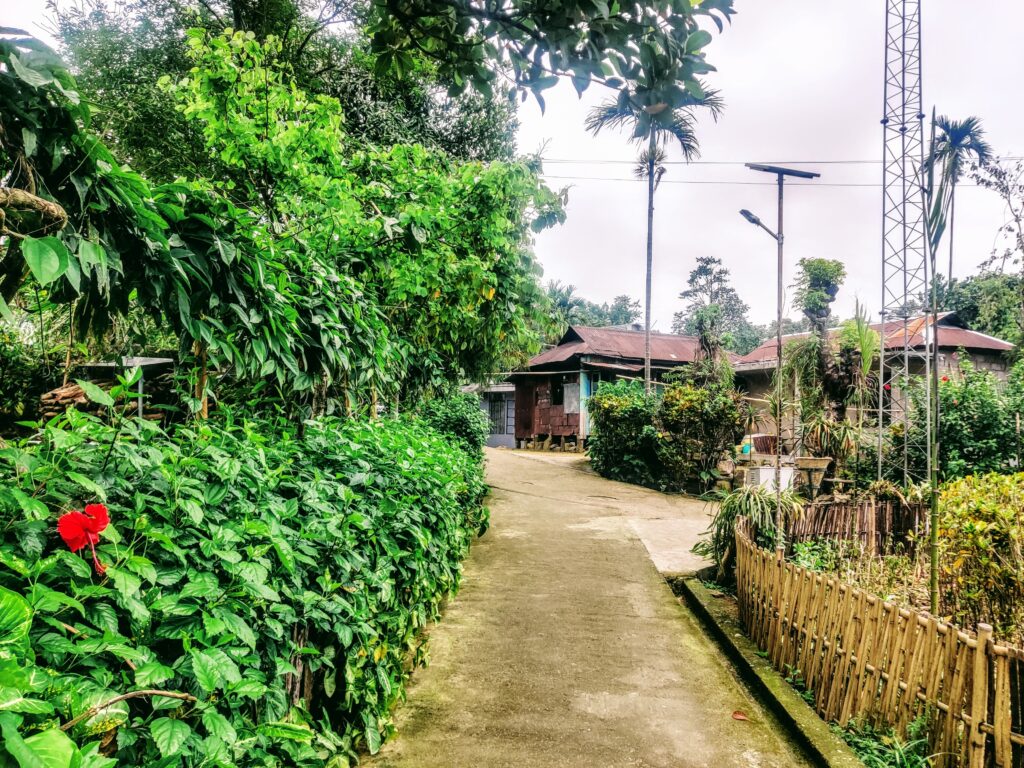
Mawlynnong Village, also known as the cleanest village in Asia, is a picturesque and serene village. The village is famous for its cleanliness, greenery, and unique culture.
The villagers are proud of their village and work hard to keep it clean and tidy. The streets are spotless, and there is no litter to be seen anywhere. The village has set an example for the rest of the country and has won several awards for its cleanliness.
Apart from its cleanliness, Mawlynnong Village is also known for its beautiful gardens. The villagers have created a unique ecosystem where they use organic waste to grow flowers and vegetables. The gardens are a feast for the eyes. The villagers also use the plants to create beautiful handicrafts, which make great souvenirs for tourists. Popular places to check out in the village are the Nohwet living root bridge, the Church of Epiphany, and the Sky View vantage point.
We couldn’t spend much time here as our plan was to visit Dawki and go back to Guwahati on the same day. After sitting in our car for hours to reach Dawki, all of us started limping because of the trek to Nongriat on the previous day.! But that did not deter us from visiting a few more places.
10. Indo-Bangladesh border
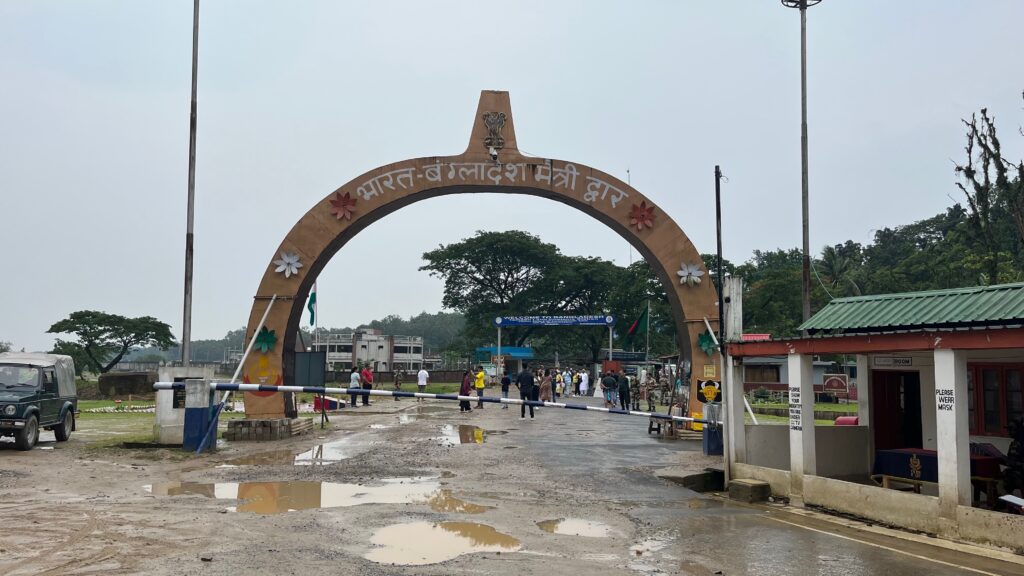
The road to Dawki from Mawlynnong was a bit bumpy due to the rains. We first went to the border post of India-Bangladesh. It seemed like a very friendly border post.
We casually gave our phone to a young boy to click our pictures and he did take good pictures but the border security alerted us that the boy was from Bangladesh (there’s simply no way to know from which side of the border the people are by looking at them!) and asked us to be careful not to hand our phones/cameras to strangers as in case the boy had run away to his country with our phone, it would have been very difficult to retrieve it (wouldn’t want to be involved in international disputes now, would we?!!).
We clicked some pictures and saluted our Army personnel guarding the post, for their sacrifice and service to the nation.
11. Umngot River (aka Dawki River)
Umngot River, located just 2-3 km from the Indo-Bangladesh border post, is one of the most beautiful and pristine rivers in the country. The river is famous for its crystal-clear waters that reflect the surrounding landscape, making it a popular destination for tourists and locals alike.
The Umngot River originates in the East Khasi Hills and flows through the Jaintia Hills before finally meeting the Brahmaputra River in Bangladesh. The river is known for its turquoise blue waters, which are so clear that one can see the riverbed and the fish swimming in the water. The river also has a unique ecosystem, with various species of fish and other aquatic creatures inhabiting the clear waters.
The best time to visit the Umngot River is during the winter months, from November to February when the weather is dry and pleasant. As the rains had already started when we visited, the river was muddy and we could not see the crystal clear waters. Still, it was a beautiful place to visit with stunning and serene views of the hills around. The river is surrounded by lush green forests and rocky cliffs, which offer a beautiful backdrop for photography enthusiasts.
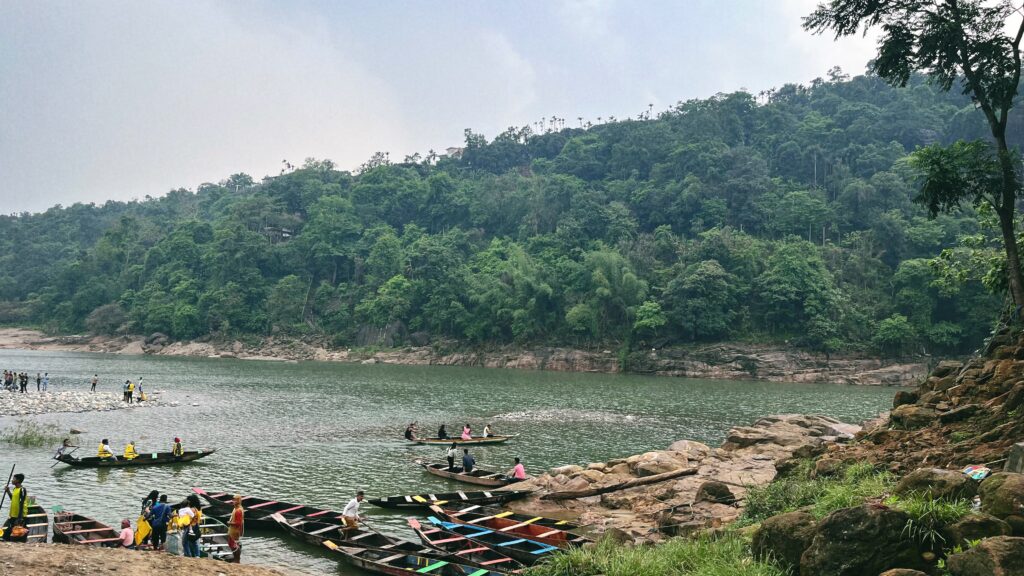
The Umngot River is also famous for its boating activities, which offer visitors a chance to explore the beauty of the river up close. Boats made of bamboo, locally known as ‘dong,’ are used to ferry tourists across the river. The boat rides are a unique experience, and one can witness the beauty of the river and the surrounding landscape from a different perspective.
There are also options to camp near the river but we did not go for it, considering rains were expected at the time we visited. We took some great pictures at the river. After spending some time there, we set out for our next destination, the Krangshuri Falls.
12. Krangshuri Falls (Krangsuri Falls)
The road from Dawki to Krangshuri Falls was filled with potholes and it was a rather bumpy ride. The road leading to the falls was also a kachcha road. Only after reaching the falls did we realize that it was a 30 min trek down some steep steps to reach the falls which none of us had the energy to take! It also started raining heavily by the time we reached the falls, so we decided to skip it. Yes, your trip can be this uncertain.!
But here’s a little information about the falls. Krangshuri Falls are known for their crystal-clear waters and lush green surroundings, making them a popular destination for tourists and nature lovers. The color of the plunge pool is a most stunning shade of deep, copper sulfate blue in Summer.
The waterfall is located deep within the dense forests of Meghalaya and can be reached after a 30-minute trek through narrow bridges, steep stairs, and rocky terrain to reach the waterfall. The trail is surrounded by dense foliage, and one can witness the beauty of the forests up close.
The waterfall drops from a height of around 100 feet into a natural pool, which is perfect for swimming and relaxing. The pool is surrounded by rocks, which offer a perfect vantage point to take in the beauty of the waterfall.
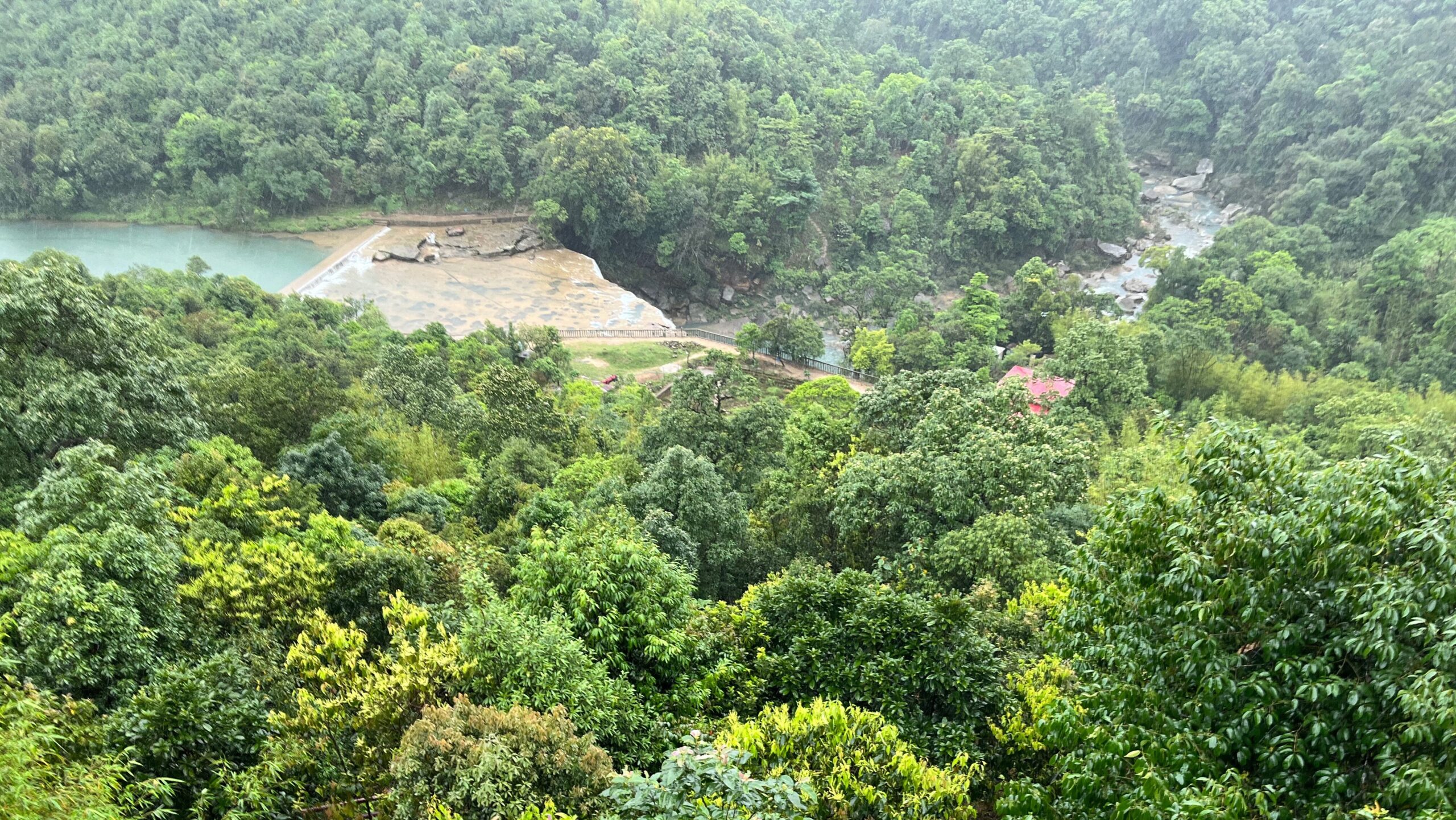
This was the view we could see from the top. You can trek down to reach the plunge pool at the bottom to enjoy the view.
This was our last stop in Meghalaya and we had to get back to Guwahati to catch our flights the next day. Though we had to skip a lot of places we had planned to visit, due to the weather or lack of time, we had a truly memorable, amazing, and relaxing time in Meghalaya. Not only the tourist spots, but the journey through the meandering roads surrounded by hills, streams, and forests was also a delight to our eyes and hearts. As they say, the journey is as enjoyable as the destinations..!
Meghalaya, the ‘abode of the clouds’, is now also the ‘abode of a piece of our hearts’. It is a state of plenty of natural beauty and the amazing tribes and people, who have conserved it throughout centuries in its pristine form.
With a heavy but content heart, we bid adieu to Meghalaya and started our journey back to Guwahati which takes 5-6 hours from Krangshuri. We reached Guwahati around 8 pm and ordered some food to our stay at Guwahati. We booked a stunning 4-bedroom apartment with a beautiful view of the Brahmaputra River. The stay was pretty, cozy, and comfortable with great interiors and absolutely beautiful views of the river.
Day 6
After a good night’s sleep, we had half a day in Guwahati till we had to take our flights back to our busy lives. So we decided to have breakfast and take a stroll for a while near the river and then visit the famous Kamakhya temple.
You can take a pleasant walk in a park by the Brahmaputra river. You can also go across the river on a boat ride or a ropeway. After spending some time by the river, we went to visit the famous Kamakhya temple.
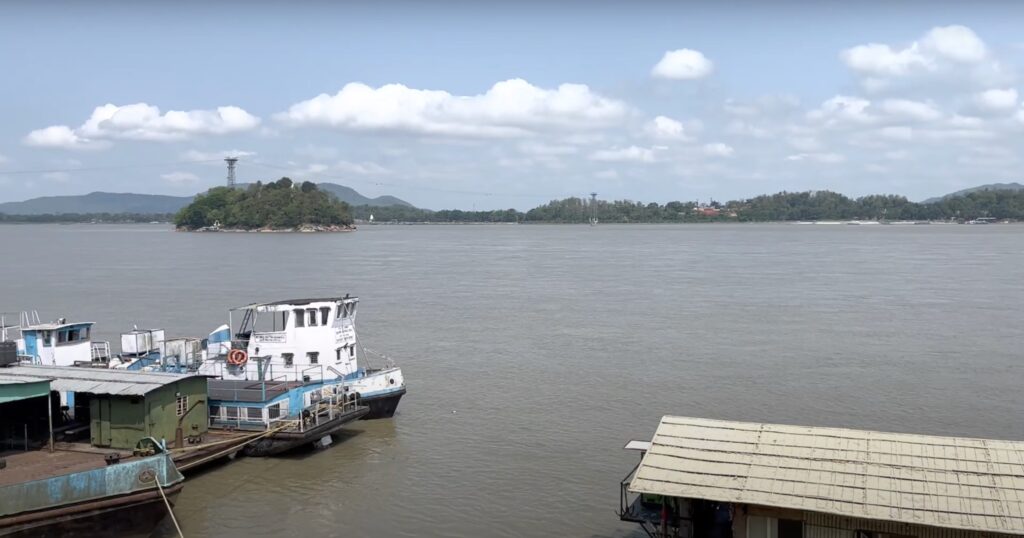
Kamakhya Temple
The Kamakhya Temple is one of the most important Hindu pilgrimage sites in the country. The temple is dedicated to the goddess Kamakhya, who is believed to be the embodiment of the Shakti (female power).
The temple is located on top of the Nilachal Hill, overlooking the Brahmaputra River. The temple complex consists of several shrines and temples, each dedicated to a different deity or aspect of the goddess Kamakhya. The main temple is a complex of four chambers, each representing different aspects of the goddess.
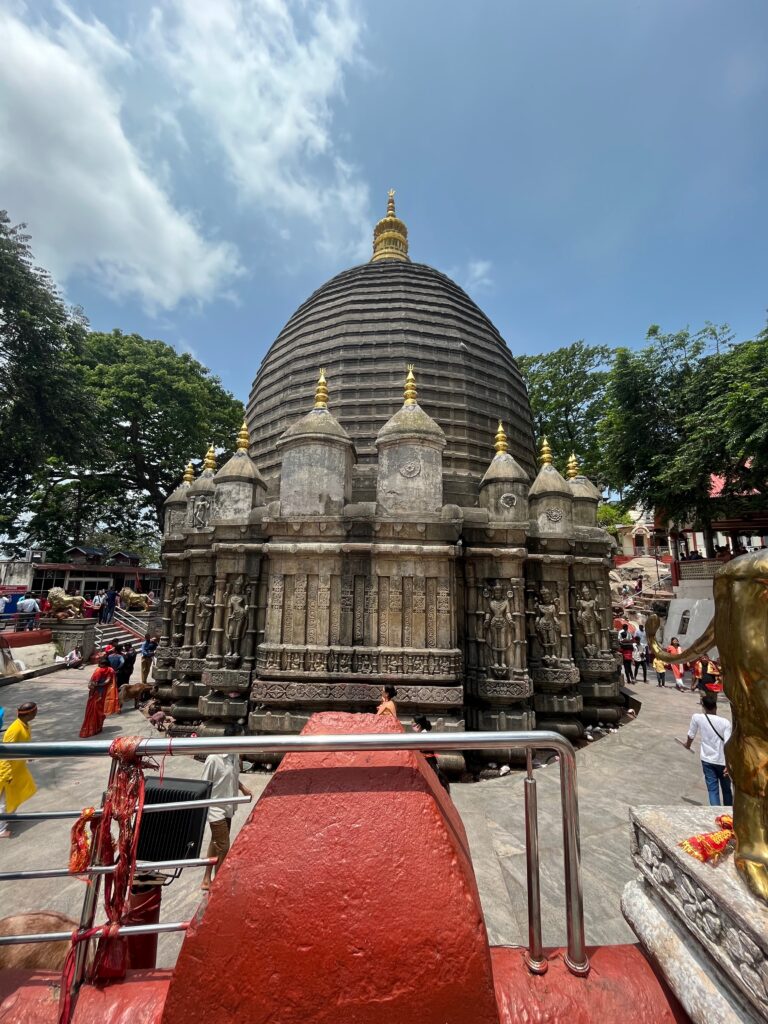
The temple is known for its unique architecture, which is a blend of Hindu and Islamic styles. The temple’s dome is made of gold and is said to represent the goddess’s vulva. The temple’s inner sanctum, which is accessed through a narrow passage, is where the goddess’s shrine is located.
According to Wikipedia, historians have suggested that the Kamakhya temple was likely an ancient sacrificial site for Khasi and Garo peoples and that the name originates in the Khasi goddess, Ka Meikha (literally: old-cousin-mother). These claims are supported by the folklore of the Khasi and Garo people.
In the Kalika Purana, Kamakhya Temple denotes the spot where Sati’s yoni (genitals, womb) fell after Shiva performed tandava (dance of destruction) with the corpse of Sati. It mentions Kamakhya as one of four primary shakti peethas: the others being the Vimala Temple within the Jagannath Temple complex in Puri, Odisha; Tara Tarini, near Brahmapur, Odisha, and Dakhina Kalika in Kalighat, Kolkata.
The temple is also known for its annual Ambubachi Mela in the month of June, which celebrates the goddess’s menstruation. During this festival, the temple is closed for three days, and devotees from all over the country come to offer their prayers and seek the goddess’s blessings after the temple reopens. ‘Ambubachi’ means ‘spoken with water’ and it also implies that the rains expected during this month make the earth fertile and ready for procreation. Thus, the festival has agricultural, social, and cultural significance and is one of the largest congregations in eastern India.
As we had very less time to stand in the long line to reach the shrine (which we failed to contemplate before planning to visit), we went for Mukha Darshanam, where we could see the shrine from a distance. You can enter from gate no. 2 for Mukha Darshanam.
A peculiar thing we observed at the temple was that there were many goats simply roaming about inside the temple. Out of curiosity, we asked our auto driver while going back from the temple about the goats. He said that goats would be brought in for sacrificial rituals but devotees can also choose to just let the goats go free without sacrificing them and hence you can find many freely roaming goats inside the temple. Kudos to humanity! Reminds me of a funny reel by a popular YouTuber. Here’s the link to some chuckles: https://youtube.com/shorts/ffEulj4cPs4?feature=share
We had to hurry back to our stay, pack and leave for the Airport. On our way back to our stay, we bought some Assam tea from a local market in Guwahati. The same tea is available for thrice the price at the Airport as some branded tea. If you have time, buy some tea from a local market.
And thus, our trip to Meghalaya came to an end with loads of memories made for life. There are many other beautiful and stunning places to visit in North East India, and I hope I will get to visit them all sometime in the future.
Tips for the trip:
- Carry warm clothes as it can get quite chilly even during the day
- Wear comfortable shoes/sandals as there will be many treks
- Carry first aid kits, and motion sickness tablets (the road is curvy in some places)
- Please respect the local culture. Most places close early at night so carry enough snacks if you are a late-night snacker.
Check out my blogs on trips to Kodaikanal and Andaman & Nicobar Islands.
FAQs
1. How much does Meghalaya trip cost?
A. It cost us around Rs 30k – Rs 33k per person (depending on flight costs) for a trip of 6 days & 5 nights. The costs include flight tickets, vehicle costs (pre-booked Innova Car from Guwahati for 5 days), accommodation, and food. It can cost a little less if you opt for budget stays and local/public transport.
2. What is the best time to visit Meghalaya?
A. Depends on the places you want to visit. Spring and winters are best for going on treks and visiting the Umngot River which will be crystal clear in non-rainy season. In the rainy season, you can see the waterfalls at their full potential but you may not be able to experience them from up close. I would suggest visiting in the winter and spring seasons (Nov-April) as you can take the various treks without worrying about rains and it can give a great escape from the scorching heat elsewhere in summer.
3. How many days is good for Meghalaya trip?
A. Though we could not visit all the places in our original list, 1-2 weeks is good enough to enjoy Meghalaya. You can also just book accommodations with great views and just enjoy the nature, weather, and tranquility without going anywhere, if you need a peaceful getaway.
I am packing my bags to Meghalaya after reading this! ❤️
It shall be a memorable experience 😀
Beautifully written. Made me visit meghalaya through ur description. Will plan a trip for sure after reading this.